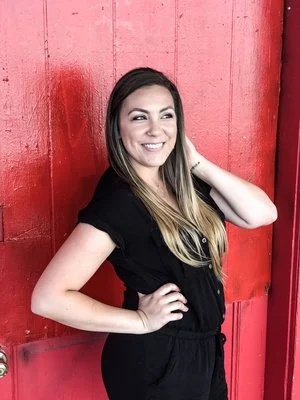
EP07. Belle Gibson: “Trust Me, I’m Dying”
-
When Belle Gibson appeared on Instagram in the early 2010s, she seemed to embody everything audiences were beginning to want from social media.
She was young, relatable, vulnerable and apparently surviving terminal brain cancer after rejecting conventional treatment in favor of nutrition and alternative therapies. Her following grew. Her wellness app, The Whole Pantry, became a success. Penguin published her cookbook. Apple promoted her work. Major magazines and television programs repeated her story.
Then journalists began asking where the money Gibson had promised to charity had actually gone.
That relatively simple question eventually exposed something much larger: Gibson had never had cancer at all. Australian courts later found that she and her company had made misleading representations about her cancer story and charitable giving, and Gibson was ordered to pay $410,000 AUD in penalties.
But knowing the ending makes it dangerously easy to look backward and wonder how anyone believed her.
This episode asks a different question:
Why wouldn't they?
Most human relationships depend on extending belief to people when they tell us something painful. We don't demand medical records when someone tells us they're sick or documentary evidence when a friend tells us they're grieving. Compassion requires a certain amount of trust.
Belle Gibson's story exploited the same social instincts that allow genuine vulnerability to create meaningful human connection.
In this episode, we explore how self-disclosure can create feelings of intimacy, how parasocial relationships allow audiences to feel genuinely connected to people they've never met, and why perceived authenticity can make someone's message more persuasive. Research into influencer behavior has found meaningful relationships between intimate self-disclosure, perceived authenticity, parasocial relationships, trust and behavioral intentions.
We also examine the role institutions played in Gibson's rise. Her credibility wasn't built by Instagram followers alone. Media outlets, publishers and major technology companies amplified a medical story that had not been adequately verified, creating layers of social proof around someone whose authority ultimately rested on a fabricated diagnosis.
And then we take the question beyond Belle.
What happens when vulnerability becomes one of the primary ways we determine whether someone is "authentic" online? What happens when creators can see, in real time, which versions of themselves generate the most attention and connection? And where is the boundary between sharing lived experience and acquiring authority from it?
The episode ultimately argues that Belle Gibson shouldn't make us less compassionate.
Instead, her story gives us a reason to separate things the internet has increasingly blurred together: vulnerability, authenticity, honesty, expertise and credibility.
Someone's experience can deserve compassion without automatically making their conclusions reliable.
And someone can make us feel deeply connected to them without us actually knowing who they are.
Topics Covered
Belle Gibson and The Whole Pantry
The fake brain cancer diagnosis
The psychology of self-disclosure
Vulnerability and perceived authenticity
Parasocial relationships
Influencer marketing and social proof
Lived experience versus expertise
Institutional validation and credibility
The economics of attention
Why audiences reward personal disclosure
Compassion versus informational trust
How to remain skeptical without becoming cynical
-
Belle Gibson & The Whole Pantry
Consumer Affairs Victoria — Annabelle Gibson and Inkerman Road Nominees court action — Official summary of the Federal Court proceedings, Gibson's false representations, injunctions and the $410,000 AUD penalty.
ABC Media Watch — How the Media Fell for Belle — Particularly useful for tracing how Gibson's claims were repeated by Australian media and how little verification occurred before publication.
ABC News — Legal Action Over Belle Gibson's Cancer Claims — Covers Consumer Affairs Victoria's case and Penguin Australia's acknowledgement that Gibson's medical claims had not been substantiated before publication.
ABC News — Belle Gibson Fined $410,000 — Contemporary reporting on the Federal Court penalty and Justice Debra Mortimer's findings.
ABC News — What Happened to Belle Gibson? — Useful retrospective covering the court proceedings, unpaid penalties and later enforcement efforts.
SBS News — Belle Gibson Penalty Still Being Pursued in 2026 — Confirms that Consumer Affairs Victoria said in May 2026 that the outstanding penalty had not been written off and enforcement was continuing.
Victorian Parliament — 2026 Budget Estimates Hearing — Primary-source parliamentary discussion concerning the status of Gibson's outstanding $410,000 penalty.
Vulnerability, Self-Disclosure & Parasocial Relationships
Leite & Baptista — The Effects of Social Media Influencers' Self-Disclosure on Behavioral Intentions — Study of 433 participants examining intimate self-disclosure, source credibility, parasocial relationships, brand trust and purchase intentions.
Nah — The Appeal of "Real" in Parasocial Interaction — Experimental research finding that intimate self-disclosure increased perceived authenticity, which contributed to liking and message acceptance.
Influencers' Intimate Self-Disclosure and Consumer Self-Brand Connections — Research examining how intimate influencer disclosures can foster parasocial relationships and stronger connections between consumers and brands.
Too Much Information: Self-Disclosure in Influencer Campaigns — An important counterpoint: greater disclosure isn't automatically beneficial. Disclosure perceived as inappropriate can actually reduce trust and purchase intentions.
Influencer Authenticity, Self-Disclosure and Parasocial Relationships — Recent research examining how perceived authenticity helps connect influencer self-disclosure with parasocial relationships and audience engagement.
Social Media, Influence & Consumer Behavior
Pew Research Center — Why and How People Use TikTok — Pew found that 62% of U.S. adult TikTok users surveyed said product reviews or recommendations were at least one reason they used the platform.
Pew Research Center — TikTok Users and Product Recommendations — A closer examination of how consumers use social platforms for purchasing information and recommendations.
Legal & Media Accountability
Victorian Government — Belle Gibson Penalised for Misleading Health Claims — Government summary of the consumer-law case and individual penalties associated with Gibson's false charitable representations.
ANU Law Reform & Social Justice — Director of Consumer Affairs Victoria v Gibson — Accessible legal discussion of the Federal Court decision and the difficult question of Gibson's mental state and intent.
The Guardian — Legal Action Over Gibson's Cancer Claims — Covers both the Gibson proceedings and the consequences for Penguin's failure to substantiate the health claims it published.
Documentaries & Interviews
The Australian Women's Weekly — Belle Gibson Interview (2015) — The interview in which Gibson was directly confronted about her cancer claims and acknowledged that the story was untrue. It remains one of the most important primary media sources for understanding the unraveling of her public identity.
60 Minutes Australia — Belle Gibson Interview (2015) — Tara Brown's extended interview with Gibson following the collapse of The Whole Pantry, including unusually difficult exchanges about Gibson's cancer claims, personal history, and even her age.
ABC Media Watch — “How the Media Fell for Belle” — An especially valuable examination of the other side of the scandal: how Australian television, magazines, publishers, and other institutions repeatedly amplified Gibson's story without adequately verifying its central claims.
Netflix — Apple Cider Vinegar (2025) — A dramatized series inspired by Gibson's rise and downfall within the wellness industry. Useful as a cultural interpretation of the case rather than a documentary source; the series fictionalizes and combines elements of the real story.
The Central Question
Belle Gibson's story raises a larger question than how one woman convinced so many people that she had cancer:
Why does vulnerability make someone feel more trustworthy—and what happens when we mistake emotional intimacy for credibility?
Most of us extend compassion without demanding proof. That's part of how relationships work, and the episode doesn't argue that we should become more suspicious of people who share their suffering. Instead, Gibson's story exposes several distinctions that become unusually difficult to maintain online.
Someone can deserve kindness without deserving authority. Lived experience can be meaningful without becoming universal expertise. A person can feel authentic without necessarily being accurate. And the intimacy created by following someone's life can feel remarkably similar to actually knowing them.
The challenge isn't learning to distrust vulnerability; It's learning how to remain compassionate without discarding discernment.
-
This episode examines several recurring themes in psychology, digital culture, and human behavior:
Vulnerability and trust
Self-disclosure
Perceived authenticity
Parasocial relationships
Emotional trust vs. informational trust
Social proof
Influencer culture
Authority and credibility
Identity formation
Social reinforcement
Attention and validation
Online intimacy
Curated identity
Compassion and skepticism
Consumer persuasion
The commercialization of vulnerability
Belle Gibson's Fake Cancer Scam: How Vulnerability Built Trust Online
Belle Gibson built a wellness empire around an extraordinary story: she had terminal brain cancer, conventional medicine had failed her, and nutrition and alternative therapies had helped her survive.
There was just one problem: She never had cancer.
But this episode isn't really about how Belle Gibson fooled hundreds of thousands of people. It's about why her story was so easy to trust in the first place.
From The Whole Pantry and the institutions that legitimized Gibson's story to the psychology of self-disclosure, parasocial relationships, influencer culture, and our growing expectation of authenticity online, this episode explores what happens when vulnerability starts functioning as evidence.
Because most of us don't respond to another person's suffering by asking for proof. We respond with compassion. That's usually one of our better instincts.
So how do we protect that instinct without allowing intimacy, relatability, and personal experience to become substitutes for credibility?
Belle Gibson's story exposes an uncomfortable problem with the way we decide who feels trustworthy online:
Feeling like we know someone isn't the same as actually knowing them.