
What Is a Delusion? True Crime's Misused Word
We call people delusional all the time, and true crime leans on the word just as casually. But clinically, being wrong isn't a delusion, and “the offender was delusional” isn't an explanation. In this first Side Notes episode, we break down what delusions actually are, how they differ from conspiracy beliefs, obsessions, paranoia, and hallucinations, and what the research really says about delusions and violence. What should we listen for when a story calls someone “delusional”?
Published October 8, 2026 | Featuring: Jessica Strohm

A Side Note on a Word We Use Too Casually
This is our first Side Note: a shorter, more relaxed, less scripted detour from the main show. Side Notes give me room to follow interesting threads that don't need an entire hour-long episode. Sometimes that's a psychological concept that comes up constantly in true crime, sometimes it's connected to a case we've already covered, and occasionally it might be a current story I find interesting and want to talk about. They're also a chance for us to get to know each other a little better, with a little more of my natural personality than the carefully researched, meticulously written main episodes leave room for.
For this one, I wanted to start with a word we all use casually: delusional. It's a natural follow-up to our two-part Richard Chase series, where delusions play an enormous role. We call each other delusional all the time. (I'm fully convinced I'll win the lottery someday, which I call manifesting and others might call delusional, but clinically that isn't what the word means.) True crime coverage uses the word just as freely, and when an offender is described as delusional, that one word is often expected to explain everything, as if it were a catch-all for someone being mentally ill, irrational, unpredictable, or dangerous, even though those are several separate things.
What Is a Delusion, Clinically?
The basic clinical definition of a delusion is a belief held with enough conviction that contradictory evidence doesn't meaningfully change it. The second half of that sentence is the important part, because all of us believe things that aren't true. We misunderstand things, get bad information, and make assumptions. At some point, most of us have been convinced someone was mad at us because they didn't answer a text for six hours, only to discover they were asleep. Being wrong isn't a delusion.
Say I become convinced my neighbor stole a package off my porch because I saw him nearby that afternoon. He pulls up his security footage, and it clearly shows someone else taking it. I say, “Oh, sorry, I was wrong.” Reality corrected me, and I accepted it. Now imagine I look at the same footage and decide he must have hired the person in the video. When you tell me he was at work, I conclude his employer is covering for him. When the police find no evidence connecting him to the theft, I become almost certain he's gotten to the police too. In a delusion, every piece of evidence that should weaken the belief gets absorbed into it instead.
Even then, stubbornness alone isn't enough to diagnose a delusion. If it were, Thanksgiving dinner would qualify as a mass psychiatric event. Clinicians have to look at the belief in context: how the person arrived at it, how attached they are to it, whether their culture or community shares it, whether there's a plausible factual basis, what happens when they're shown evidence against it, and what else is happening psychologically. Stripped down, a delusion is a belief someone is deeply convinced is true even without good evidence, one that contradictory evidence usually does little to shake.
Delusions vs. Conspiracy Theories
Conspiracy theories help us find that line, because conspiracy beliefs are often social. A community reinforces them, supplies supposed evidence, interprets events, and gives the person a framework that others share. In that world, you can believe something completely unsupported and highly implausible, like alien life forms at Area 51 or a shadow government, without having a clinical delusion. It might sound delusional to someone else, but there's a shared belief behind it.
Clinical delusions tend to be more organized around the individual, and more personal. Instead of simply believing government surveillance exists, a person might believe a particular agency installed cameras in their home because of something unique about them. Or they might be convinced a TV anchor is embedding messages meant specifically for them in the evening news. The broader culture can absolutely shape the content of a delusion, but the belief itself usually becomes intensely personal.
Overvalued Ideas, Obsessions, and Everyday Paranoia
Conspiracy theories aren't the only place where this gets fuzzy. An overvalued idea is a belief that becomes disproportionately important to a person, to the point that it shapes their identity. They devote huge amounts of time and energy to it, and the belief can become rigid enough to be very hard to challenge. But you can usually trace a psychologically understandable road that led them there. We see overvalued ideas all over everyday life and in politics, where there are people in every party who hold them. Researchers and clinicians argue about exactly where overvalued ideas end and delusions begin, which is a good reminder that psychiatric categories don't always come with clean borders.
Obsessions are another look-alike. OCD can involve thoughts that feel incredibly convincing. Take an intrusive thought like “What if I hit somebody with my car and somehow didn't notice?” As ridiculous as it might sound, it can become extremely distressing. Someone with OCD might drive back repeatedly to check the road, search local news, inspect their car, or keep asking others for reassurance that it didn't happen. But there's usually still some recognition that the fear may not be rational; the person is tortured by the possibility. A delusional belief would be closer to becoming genuinely convinced it happened despite having no evidence. Even that line can blur, because OCD exists on a spectrum too.
Then there's everyday paranoia. If you're walking through a parking garage late at night and notice someone following you, becoming suspicious isn't pathological. Your brain is supposed to notice possible threats. Even someone who is excessively suspicious isn't automatically delusional. It becomes a persecutory delusion when a person is genuinely convinced that someone is deliberately targeting them without adequate evidence that it's actually happening: spying on them, poisoning them, following them, or planning to hurt them.
Delusions vs. Hallucinations
True crime coverage sometimes treats delusions and hallucinations as interchangeable, and they aren't the same thing. A hallucination is a perception: hearing a voice that isn't being produced by another person, or seeing something that isn't there. In other words, a sensory experience without an external source. A delusion is a belief.
If I hear a voice say, “Your neighbor's trying to kill you,” the voice is the hallucination. If I then become convinced my neighbor is trying to kill me, that's the delusion. The two can absolutely happen together, and repeatedly hearing a voice say someone's trying to hurt you can reinforce a persecutory belief about that person. A command hallucination, a voice telling you to do something, is still a hallucination. It isn't a type of delusion.
“Being wrong isn't a delusion.”
— Jessica Strohm, Host & Show Creator
Does Having Delusions Mean Someone Has Schizophrenia?
No. Delusions can occur in schizophrenia and other psychotic disorders, but they can also appear in severe mood disorders like bipolar disorder. Drugs or medication can trigger psychosis and delusions, and certain neurological and medical conditions can cause them too. Dementia, which might be surprising, can involve delusional thinking as well.
There's also a condition called delusional disorder, which is especially interesting in the context of crime because someone with it can come across as completely ordinary. They might work, pay their bills, maintain good relationships, and hold a normal, benign conversation with you. Then you mention the woman who lives three streets away, and they calmly explain that she's in love with them and secretly communicates it through which curtains she opens in the morning. Outside that specific belief system, their functioning can be relatively intact, which is one reason our stereotype of someone in psychosis doesn't hold up. People in psychosis aren't always visibly disconnected from reality every second of the day.
The Main Types of Delusions
Clinicians describe several recurring types of delusions, and you'll probably recognize some of them if you listen to a lot of true crime.
- Persecutory: the belief that somebody is after you. A neighbor is poisoning your food, the government is watching you, your coworkers are conspiring to get you fired, someone is planning to kill you.
- Referential: the belief that ordinary things around you contain a special message meant for you. The radio host is secretly talking about you, strangers laughing across a restaurant are discussing you, a billboard was placed there so you'd see it.
- Grandiose: beliefs about exceptional status, power, identity, or ability. A person might believe they're a prophet, an intelligence operative, the inventor of a revolutionary technology, or someone with abilities nobody else has.
- Somatic: beliefs about the body. Being infested with parasites, having a missing organ, a body that's decaying, or some impossible physical process happening inside you.
- Jealous: absolute conviction that a romantic partner is being unfaithful despite inadequate evidence.
- Erotomanic: the belief that another person is in love with you, sometimes someone you've barely met, or never met at all.
What Happens When Someone Acts on a Delusion?
Those categories give us a vocabulary. The more interesting question for a show like this is what happens when someone starts making decisions based on one of those beliefs. Some delusional behavior has an internal logic. If you believe there's a fire in your house, running outside makes perfect sense. Your behavior looks irrational to everyone else only because there isn't actually a fire.
Erotomania gives us a particularly clear example because it shows up in stalking cases. In the 1990s Montana case State v. Cooney, psychiatric experts testified that the defendant had an erotomanic-type delusional disorder. According to reports, he persistently pursued a woman for years despite protective orders, previous legal intervention, and her very clear attempts to avoid him. Once the belief that she loves him is fixed, every rejection needs an alternative explanation. If she says she wants no contact, maybe her family is pressuring her. If she gets a restraining order, maybe someone talked her into it. If she avoids him, maybe she's frightened by the intensity of her own feelings. The evidence of rejection doesn't weaken the delusion, because the delusion reinterprets the rejection.
We've already covered Richard Chase on this show, so I won't turn this into an extension of that episode, but he's a useful example because his psychosis was so extensively documented. Chase had severe somatic and persecutory beliefs involving his body and his blood. He believed something was catastrophically wrong with him, and over time those beliefs became connected to his consumption of blood. That tells us something important about why his behavior was so bizarre: he wasn't operating from a sound understanding of what was happening inside his body. He was responding to a physical crisis that, from his perspective, was completely real.
An Illinois case involving a man named Branden Napolitan highlights the same principle even more directly. According to the forensic evaluation discussed in his case, Napolitan believed another man intended to kill him, and he was hearing voices telling him to stab that person. That's two separate psychotic symptoms at once: the voices were hallucinations, and the belief that the other man meant to kill him was a persecutory delusion. The evaluator concluded that Napolitan understood, generally speaking, that stabbing someone was illegal, but experienced the situation through a psychotic belief that he was defending himself from an imminent threat. For Napolitan, what was happening was real, so in his mind his response was entirely appropriate given the circumstances.
Do Delusions Cause Violence?
The research doesn't give us a satisfying one-word answer. Most people with schizophrenia or other psychotic disorders aren't violent, and people with serious mental illness are disproportionately more likely to become victims of violence themselves. At the same time, psychotic disorders have been associated with an increased risk of violence compared with people who don't have them. The easiest way to hold both of those facts at once is to stop treating psychosis as the whole explanation and look at the circumstances surrounding violence instead.
A large 2025 review of longitudinal studies, meaning long-term studies that followed the same people over time, covered more than 200,000 people with psychotic disorders. Some of the stronger predictors of violence weren't unusual psychiatric symptoms at all. Previous criminal behavior, substance misuse, and treatment-related factors mattered more. Older research points the same way: the link between psychosis and violence becomes substantially stronger when substance misuse is also present, and studies repeatedly identify previous violence, hostility, intoxication, poor impulse control, and treatment disruption as relevant parts of the risk picture.
So when I hear that someone in a criminal case was delusional, the first thing I want to know is what the delusion actually involved. Were they convinced someone was threatening them, for example? Then I want the broader context, because substance use, acute agitation, hallucinations, previous violence, and whether they were receiving treatment may tell us far more about risk than the word “delusional” does on its own.
The content of a belief can matter too, which is where persecutory delusions get interesting. A group of researchers analyzed data from the MacArthur Violence Risk Assessment Study, which followed psychiatric hospital patients after they were discharged, and found something more complicated than I expected. Looking at someone's delusions at one point in time and trying to predict violence over the following weeks didn't work very well. But when they looked at what was happening around the time of an act of violence, certain delusions showed up more often: beliefs that someone was following, spying on, plotting against, or controlling them were associated with serious violence. Those threat-related delusions were also strongly associated with anger, and once the researchers accounted for anger, much of the relationship between delusions and violence weakened.
That changes the question. It isn't simply “this person has delusions, so they're more likely to be violent.” Certain delusions can create a very immediate sense of threat, and when that threat also produces intense anger, the risk can change. Then a person's history, substance use, impulse control, treatment status, access to the supposed persecutor, and whatever else is happening in the moment shape what they actually do. From inside the person's experience, the pathway isn't as mysterious as it looks from the outside. If I sincerely believe you're planning to kill me, my nervous system is responding to a threat whether or not that threat exists in objective reality. I might hide from you, stop leaving the house, or repeatedly call the police. I might confront you because I'm frightened and desperate to make the threat stop. In a much smaller number of cases, especially when other risk factors are present, someone may decide they need to attack first.
The delusion isn't creating a generic appetite for violence. In those particular cases, it's creating a perceived reality in which violence may feel defensive or necessary to the person experiencing it. The research on whether certain threat-related psychotic experiences are especially important for assessing violence risk hasn't been perfectly consistent, with some studies finding meaningful associations and others not, which is one more reason it makes very little sense to hear “persecutory delusion” and automatically translate it into “this person is dangerous.” Timing, emotion, and the rest of a person's circumstances matter far too much.
How True Crime Distorts Our View of Psychosis
There's one more piece that matters specifically because we're talking about true crime: the sample of people we're exposed to in the first place. True crime gives us a very distorted view of psychosis because we usually start with cases where something terrible has already happened. Nobody makes an eight-part documentary about the man who became convinced his neighbors were spying on him, got terrified, withdrew from everyone, eventually received treatment, and never physically harmed anyone. There's no homicide investigation in that story, no dramatic trial, and you've probably never heard of him.
Instead, we meet psychosis through people like Richard Chase. We encounter erotomania through stalking cases. We learn about persecutory beliefs because someone attacked the person they believed was after them. We're learning about an entire category of mental health experiences through a tiny, unusually violent subset of the people who have them. Even research on first-episode psychosis, which is often considered a period of elevated risk because people may be acutely unwell and not yet receiving effective treatment, starts from the recognition that most people experiencing psychosis do not commit serious violence.
What to Listen for When a Story Says “Delusional”
If someone tells me an offender was delusional, I don't feel like I've learned very much yet. I want to know what they actually believed and whether there's good evidence they genuinely held that belief. Then I want to understand whether it had any meaningful connection to the behavior we're trying to explain. Sometimes it absolutely does. Someone who genuinely believes another person is trying to murder them may experience an attack as self-defense. An erotomanic belief may help explain why repeated rejection doesn't stop a stalking campaign. In other cases, someone may experience delusions that have virtually nothing to do with the crime they committed.
That's why I think the word gets used too casually in true crime. It sounds explanatory, when often it's really just the beginning of the explanation. Bizarre behavior isn't automatically evidence of psychosis, and irrational behavior isn't necessarily delusional. People can also commit horrific crimes while having a perfectly intact understanding of reality. So the next time someone in a documentary says an offender became increasingly delusional, pay attention to what comes after that sentence. What did the person actually believe, and did that belief genuinely help drive what happened?
If someone genuinely believed they were reacting to a reality that doesn't exist, does that change how you understand their behavior, even if it doesn't change how you feel about what they did?
Sources & Further Reading
Research Discussed in This Episode
Tyra Lagerberg, Sinéad Lambe, Anabelle Paulino, Rongqin Yu & Seena Fazel — The British Journal of Psychiatry (2025)
A review of 47 longitudinal studies covering 203,297 people with psychotic disorders, identifying criminal history and substance misuse among the strongest risk factors for violence.
Simone Ullrich, Robert Keers & Jeremy W. Coid — Schizophrenia Bulletin (2014)
A reanalysis of data from discharged psychiatric patients examining how specific delusions, and the anger they provoke, relate to later violence.
Cases Discussed
Montana Supreme Court
The opinion describing the defendant's erotomanic-type delusional disorder, his stalking charges, and the protective orders at issue.
CBS Chicago
News coverage of the 2015 charges in the Branden Napolitan case. The forensic evaluation discussed in the episode is not covered in this report.
Pretty Evil
Our two-part series on Richard Chase, whose extensively documented psychosis prompted this Side Note.
Understanding Psychosis, Delusions & OCD
National Institute of Mental Health
A plain-language overview of psychosis, including how delusions and hallucinations are defined.
Shawn M. Joseph & Waquar Siddiqui — StatPearls
A clinical overview of delusional disorder, including how it's diagnosed and why functioning outside the delusion can remain largely intact.
National Institute of Mental Health
An overview of OCD, including intrusive, distressing thoughts and the compulsions that often accompany them.
Related Enquiries
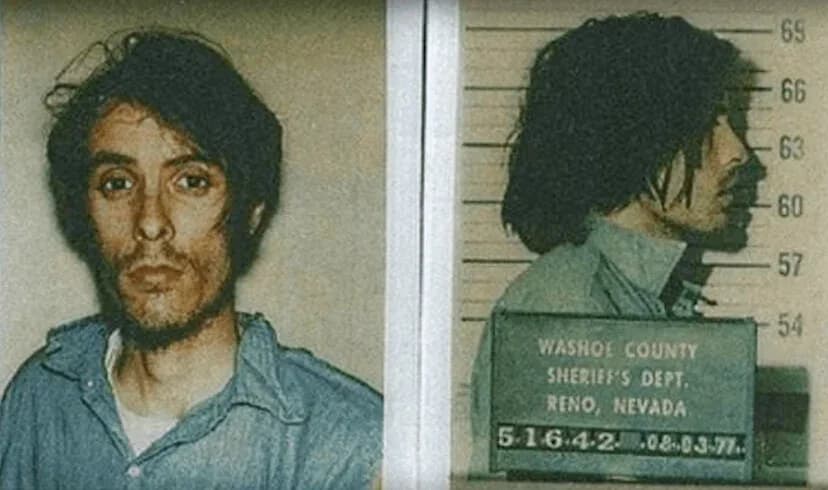
Richard Chase: The Vampire Of Sacramento
Richard Chase is remembered as the Vampire of Sacramento—a man whose crimes shocked investigators, terrified an entire city, and became one of the most infamous cases in FBI profiling history. But what if the most disturbing part of this story isn't what Richard Chase did? What if it's the fact that almost everyone saw it coming? Years before six people were murdered in Sacramento, Chase had been diagnosed with paranoid schizophrenia, repeatedly hospitalized, and documented exhibiting profoundly disturbing behavior. Nurses feared him. Doctors treated him. Psychiatric staff begged for him to remain hospitalized. Then he was released.

The War On Witches: When Good People Do Evil Things
Most of us think we already understand the witch hunts. We think of Salem; Of pointed hats, black cats, and women accused of consorting with the devil. It's one of history's most recognizable stories, which is exactly why it's so easy to gloss over. We assume we know what happened, file it away under “historic events in the rearview mirror,” and move on. But the deeper you look, the stranger it gets — and the less it has to do with the Salem we think we know.