
Charles Sobhraj & The Psychology of Trust
When people picture a serial killer, they often imagine someone who immediately feels unsettling. Charles Sobhraj challenges that assumption. Throughout the 1970s, Sobhraj moved effortlessly through the backpacker communities of Southeast Asia, presenting himself as a sophisticated gem dealer, seasoned traveler, and trusted friend. His victims weren't simply chosen at random—they were people who believed they had found someone willing to help them navigate an unfamiliar world. In this episode of Pretty Evil, we explore the psychology behind one of history's most charismatic predators and ask why emotionally intelligent manipulators are often so difficult to recognize.
Published October 1, 2026 | Featuring: Jessica Strohm

Who Was Charles Sobhraj?
Charles Sobhraj was born in Saigon, Vietnam in 1944 during French colonial rule. His mother was Vietnamese, and his father was an Indian businessman who initially refused to acknowledge him because he was born out of wedlock.
From the beginning, Sobhraj existed in an unstable social and cultural position, reportedly struggling with identity, belonging, and emotional attachment throughout childhood.
Accounts from biographers and investigators describe him as emotionally isolated, frequently in conflict with authority, and deeply resentful of the instability surrounding him.
Most people experience rejection and eventually integrate it into a stable sense of self. But in some individuals, chronic humiliation can evolve into a profound need for control, superiority, or emotional invulnerability — and Sobhraj spent much of his life constructing new identities: new names, new passports, new nationalities, new performances.
The Hippie Trail
During the 1960s and 1970s, thousands of young travelers moved through what became known as the "Hippie Trail," a loosely connected backpacking route stretching through Europe, the Middle East, India, Nepal, Thailand, and Southeast Asia.
Psychologically, these travelers were often isolated, far from home, dependent on strangers, and emotionally open — operating in a world without smartphones, GPS, or easy international communication. That meant trust formed quickly.
Sobhraj presented himself as sophisticated and competent. He claimed to be a gem dealer, spoke multiple languages, and projected calmness in environments that often felt chaotic. Rather than using intimidation initially, he gained access to people through emotional disarmament.
How Sobhraj Manipulated Trust
One of the central ideas explored in this episode is that manipulation rarely begins with fear. More often, it begins with relief — relief that someone understands you, seems confident, or makes uncertainty feel smaller.
Many manipulative individuals create a sense of rapid familiarity or emotional significance before genuine trust has actually been earned. That dynamic appears repeatedly throughout the Sobhraj case: victims accepted drinks, medication, invitations, or assistance because he seemed socially safe.
Humans are not purely logical when determining who to trust. We rely heavily on emotional heuristics — confidence, charisma, certainty, social fluency — and occasionally, those same instincts become exploitable.
“Manipulation rarely begins with fear. More often, it begins with relief.”
— Jessica Strohm, Host & Show Creator
The Murders
Charles Sobhraj is believed to have murdered numerous travelers throughout Southeast Asia during the 1970s, although the exact number remains disputed.
Victims linked to Sobhraj include Teresa Knowlton, Vitali Hakim, Stephanie Parry, and multiple unidentified travelers whose disappearances were connected through stolen passports, witness testimony, forensic evidence, and investigative work led largely by Dutch diplomat Herman Knippenberg.
One of the most disturbing aspects of the case is how ordinary many interactions initially appeared. These weren't typically abductions involving immediate force. They often began socially — through hospitality, attraction, reassurance, or shared travel culture. The danger didn't announce itself clearly. It blended in.
Marie-Andrée Leclerc and Coercive Relationships
Another psychologically complex part of this story is Marie-Andrée Leclerc, the French-Canadian woman who became romantically involved with Sobhraj and eventually participated in aspects of his criminal life, later writing that she gradually became “his slave.”
Coercive relationships rarely begin with obvious abuse or control. More often, they begin with intense emotional significance, as manipulative individuals position themselves as a source of identity, certainty, belonging, or meaning — and moral boundaries shift incrementally as emotional dependency deepens.
Why the Media Became Fascinated With Him
After his crimes became internationally known, Sobhraj gradually became something closer to a media figure than a forgotten criminal. Journalists interviewed him repeatedly; documentary filmmakers sought access to him.
Sobhraj didn't match the emotional profile people expect from violent offenders — he was articulate, socially skilled, and outwardly controlled. That contradiction made him endlessly compelling to audiences and media alike, raising an uncomfortable question: at what point does examination become amplification?
The Real Psychological Lesson of the Charles Sobhraj Case
The takeaway from this story is not “never trust charismatic people.” Many genuinely good people are socially gifted and emotionally intelligent, and many dangerous people are not charming at all.
The more useful lesson: pay attention to situations where emotional reassurance begins arriving faster than discernment can realistically keep up with it. Manipulative people often create accelerated trust — in romantic relationships, workplaces, online communities, or ordinary friendships, just as easily as in obvious criminal cases.
Some of the most consequential forms of manipulation begin by feeling comforting. That's what makes Charles Sobhraj such a psychologically unsettling figure even decades later — not simply because of what he did, but because he revealed how vulnerable human beings can become when trust is established emotionally before it is established rationally.
Sources & Further Reading
Sources Used in This Episode
Richard Neville & Julie Clarke
The definitive biography of Charles Sobhraj and one of the most important sources on the case — much of what is publicly known, including his own interviews, originates from Neville and Clarke's investigation.
BBC / Netflix
A dramatized series based on years of investigative research surrounding the murders committed along the Hippie Trail.
Channel 4
A recent televised interview with Charles Sobhraj discussing his childhood, imprisonment, and continued denial of responsibility for multiple murders.
ABC News
Historic television interviews conducted following Sobhraj's release from prison.
Herman Knippenberg
The investigative work of Dutch diplomat Herman Knippenberg proved instrumental in connecting multiple disappearances and identifying Sobhraj as the primary suspect.
Historical Context: The Hippie Trail
Wikipedia
Overview of the network of overland travel routes stretching from Europe through the Middle East into South and Southeast Asia during the 1960s and '70s.
CNN
A feature on the overland route's rise, culture, and legacy.
Psychology & Human Behavior
Dr. Ramani Durvasula
A clinical psychologist's guide to recognizing narcissistic behavior patterns and healing from relationships shaped by them.
Kevin Dutton
A psychologist's look at how certain psychopathic traits, in measured doses, can edge toward confidence and functional success rather than harm.
Robert Cialdini
An accessible exploration of the psychological principles underlying compliance, persuasion, and trust.
Evan Stark
A landmark work examining how manipulation and psychological dependency develop within relationships.
Amir Levine & Rachel Heller
An introduction to attachment styles and interpersonal dynamics relevant to coercive relationships.
Additional Reading
The Guardian
A firsthand account revisiting encounters with Sobhraj and the impression he left on those who met him.
ABC News Australia
A look at how closely the dramatized Netflix series follows the real events of Sobhraj's case.
Related Enquiries


Belle Gibson: 'Trust Me, I'm Dying'
Belle Gibson had the kind of cancer story people desperately wanted to believe. She said she'd been diagnosed with terminal brain cancer and given months to live. Instead of accepting that prognosis, she changed the way she ate, turned to alternative therapies, and somehow survived. There was just one fairly significant problem: Belle Gibson had never had cancer.
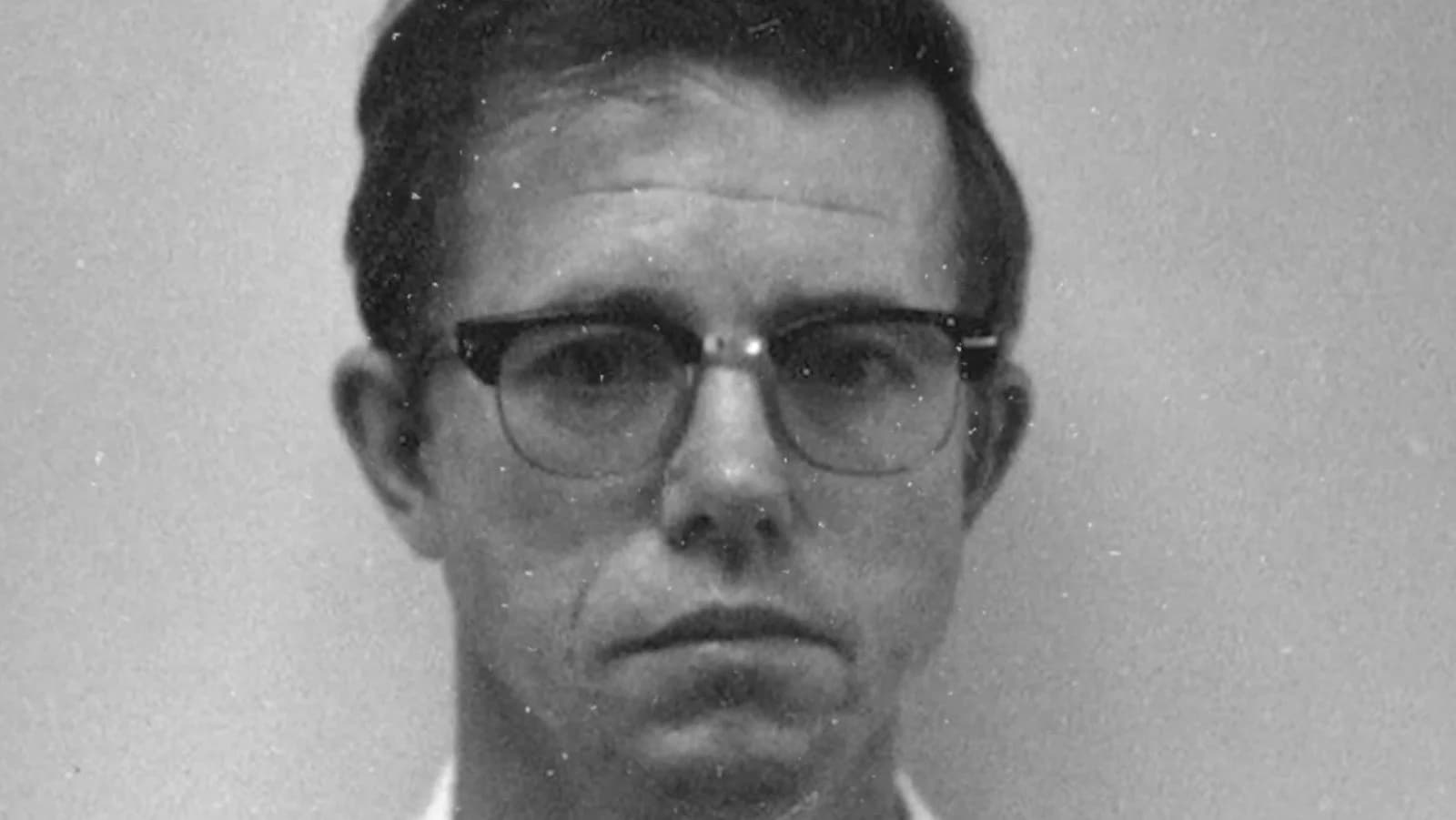
Robert Hansen & The Coward's Hunt
Robert Hansen became infamous as Alaska's “Butcher Baker,” a serial killer who abducted women, flew them into the Alaskan wilderness, and hunted them through remote terrain. Or at least that's the mythology. But I think calling what Hansen did a “hunt” gives him far too much credit. He selected women he believed society would be slow to protect. He controlled the weapons, transportation, restraints, terrain, timing, and whether anyone knew where they were. Then, he treated the helplessness he had deliberately manufactured as evidence of his own superiority. But I have a question: What does winning actually prove when you were the person who controlled the rules?