
Robert Hansen & The Coward's Hunt
Robert Hansen became infamous as Alaska's “Butcher Baker,” a serial killer who abducted women, flew them into the Alaskan wilderness, and hunted them through remote terrain. Or at least that's the mythology. But I think calling what Hansen did a “hunt” gives him far too much credit. He selected women he believed society would be slow to protect. He controlled the weapons, transportation, restraints, terrain, timing, and whether anyone knew where they were. Then, he treated the helplessness he had deliberately manufactured as evidence of his own superiority. But I have a question: What does winning actually prove when you were the person who controlled the rules?
Published August 16, 2026 | Featuring: Jessica Strohm

Robert Hansen: The Butcher Baker, Cindy Paulson, and the Truth Behind Alaska's “Hunting” Serial Killer
Robert Hansen is usually remembered through one horrifying image: a serial killer flying women into the Alaskan wilderness and hunting them through the trees. It's the detail that made him infamous. It's also, in some ways, the detail that has done the most to preserve the version of Hansen that he himself wanted people to believe.
Because calling what he did a “hunt” suggests a contest, and there was actually nothing remotely equal about the conditions Hansen created for his victims. He chose the women. He had the weapon. He controlled the transportation. He knew the terrain. He decided where they were going, when the encounter began, and whether anyone else even knew they were missing.
By the time a victim was standing in the wilderness with Hansen, nearly every meaningful variable had already been arranged in his favor.
Who Was Robert Hansen, Alaska's “Butcher Baker” Serial Killer?
Robert Hansen became one of Alaska's most notorious serial killers, eventually earning the nickname the “Butcher Baker” because of his work as a baker and the brutality of his crimes. But the mythology surrounding Hansen tends to emphasize another identity: the hunter. Hansen was an experienced outdoorsman and pilot who had built much of his adult identity around competence, independence, and mastery of the Alaskan wilderness. That image appears to have mattered deeply to him.
He had also spent much of his life carrying grievances about rejection, humiliation, inadequacy, and the way he believed other people perceived him. In Alaska, he could occupy a very different role. He could be the successful businessman, capable hunter, skilled pilot, and man who understood a landscape most people could not navigate on their own.
The wilderness gave him a stage on which he could feel powerful. But the more closely you look at that power, the less impressive it becomes.
Hansen didn't demonstrate that he could dominate people under equal conditions. He repeatedly constructed situations in which resistance was made as difficult as possible, if not impossible, and then treated the resulting imbalance as evidence of his own superiority... A distinction that becomes impossible to ignore when you get to Cindy Paulson.
Cindy Paulson's Escape From Robert Hansen
Cindy Paulson was 17 years old when Hansen abducted her in Anchorage in 1983. She was threatened with a gun, restrained, assaulted, and driven toward Merrill Field, where Hansen intended to take her aboard his airplane and fly her to a remote location. Then, Hansen became distracted while preparing the aircraft.
Paulson ran.
Nothing about the situation Cindy found herself in had suddenly become safe. She didn't know whether she'd make it. Hansen still had the weapon, controlled the transportation, and possessed almost every advantage he had deliberately created. But Cindy ran anyway.
Paulson reached a nearby road, where a passing motorist picked her up. She then gave police a detailed description of Hansen, his vehicle, his airplane, and what had happened to her. Her escape became one of the most important turning points in the investigation.
And psychologically, it exposed something else. Cindy's escape introduced the one thing Hansen had spent years trying to remove from his crimes: uncertainty.
“Sometimes the person who appears the strongest isn't the most capable. They're just the person who made sure they couldn't ever lose in the first place.”
— Jessica Strohm, Host & Show Creator
How Sergeant Glenn Flothe Connected Robert Hansen to the Alaska Murders
Paulson's account eventually drew the attention of Alaska State Trooper Sergeant Glenn Flothe, who began examining whether her alleged abductor could be connected to a broader pattern of murdered and missing women. The investigation ultimately led authorities to Hansen.
When investigators searched his property, they uncovered evidence that helped link him to multiple victims. Among the most chilling discoveries was an aviation map marked with locations throughout the Alaskan wilderness. Those markings would help investigators locate victims and understand the geographic scope of Hansen's crimes, but the map also reveals something important about how Hansen operated:
The remoteness was not incidental. Isolation gave him control.
He could choose locations his victims didn't know. He could determine how they arrived and whether they could leave. He understood the landscape in ways they did not. So, by the time a woman reached one of those locations, nearly every structural advantage belonged to him.
And, yet, this story has often been compressed into the far more dramatic image of Hansen “hunting” women in the wilderness. I hate that description, because it risks obscuring how carefully he had already engineered the outcome.
Did Robert Hansen Really “Hunt” His Victims?
The idea of Robert Hansen as a hunter has become inseparable from his public mythology, but framing his crimes that way can accidentally grant him the very identity he appears to have wanted.
A hunt implies some meaningful contest between hunter and prey. Hansen instead selected victims he believed would be vulnerable, isolated them, armed himself, controlled their transportation, chose unfamiliar terrain, and attempted to remove nearly every opportunity for resistance.
So what, exactly, did winning prove?
Not that Hansen possessed extraordinary courage.
Not that he was uniquely formidable.
It essentially demonstrated what can happen when one person controls almost every condition under which another person is expected to survive, and that's exactly what I think makes the entire idea of Hansen as an exceptionally powerful predator worth reconsidering.
To me, he seems to have needed an extraordinary number of advantages before he could experience himself as powerful at all. His crimes, therefore, reveal something much more fragile underneath the mythology.
What Robert Hansen's Crimes Reveal About Power and Control
That is where Hansen's story begins to move beyond the biography of a serial killer.
We make a similar mistake constantly when we look at outcomes and work backward to infer merit. Someone succeeds, so we assume they were more capable. Someone holds authority, so we assume they earned it through better judgment. Someone loses, and the loss itself becomes evidence that they were weaker, less competent, or somehow less deserving.
But outcomes contain the conditions that produced them.
Who had money? Who had credibility? Who controlled the information? Who could leave? Who carried the risk? Whose mistakes were forgiven, and whose mistakes became evidence about their character?
Those conditions matter enormously, yet they often disappear once we know who ultimately “won.”
Hansen's crimes offer an extreme example of that distortion. He created encounters in which nearly every condition favored him, then appears to have experienced the result as confirmation of the identity he wanted: hunter, survivor, dominant man.
Cindy Paulson's escape punctured that identity.
She acted while failure remained terrifyingly possible. Hansen, meanwhile, had spent years attempting to eliminate the possibility of failure before the encounter even began. And that difference may tell us more about strength than Hansen's carefully constructed victories ever could.
Listen to Pretty Evil: Robert Hansen & The Coward's Hunt
In this episode of Pretty Evil, we follow Robert Hansen's case through Cindy Paulson's escape, Sergeant Glenn Flothe's investigation, the discovery of Hansen's marked aviation map, and the resentment, grievance, and entitlement that shaped the identity he built for himself.
But underneath the crime story is a larger question about how we understand power, success, and merit: When an outcome appears to tell us who was stronger, smarter, better, or more deserving, how often do we stop to ask who got to design the conditions in which everyone was being judged?
Sources & Further Reading
Investigative Journalism
To be added
Lorem ipsum dolor sit amet, consectetur adipiscing elit. Sed do eiusmod tempor incididunt ut labore et dolore magna aliqua. Ut enim ad minim veniam, quis nostrud exercitation ullamco laboris nisi ut aliquip ex ea commodo consequat.
Related Enquiries


Belle Gibson: 'Trust Me, I'm Dying'
Belle Gibson had the kind of cancer story people desperately wanted to believe. She said she'd been diagnosed with terminal brain cancer and given months to live. Instead of accepting that prognosis, she changed the way she ate, turned to alternative therapies, and somehow survived. There was just one fairly significant problem: Belle Gibson had never had cancer.
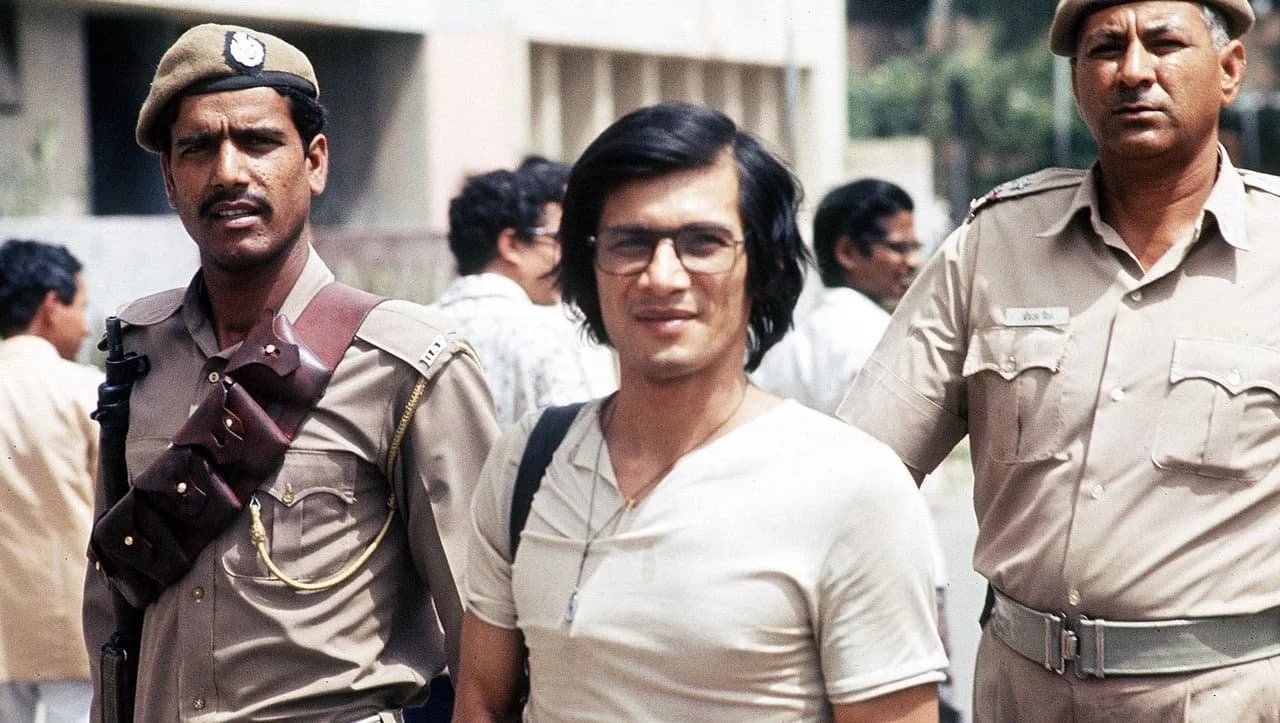
Charles Sobhraj & The Psychology of Trust
When people picture a serial killer, they often imagine someone who immediately feels unsettling. Charles Sobhraj challenges that assumption. Throughout the 1970s, Sobhraj moved effortlessly through the backpacker communities of Southeast Asia, presenting himself as a sophisticated gem dealer, seasoned traveler, and trusted friend. His victims weren't simply chosen at random—they were people who believed they had found someone willing to help them navigate an unfamiliar world. In this episode of Pretty Evil, we explore the psychology behind one of history's most charismatic predators and ask why emotionally intelligent manipulators are often so difficult to recognize.